EN — English
 TR — Türkçe
 DE — Deutsch
 RU — Русский
 FR — Français
 ES — Español
 AR — العربية
 SR — Српски
Crushing Plant Feasibility Study
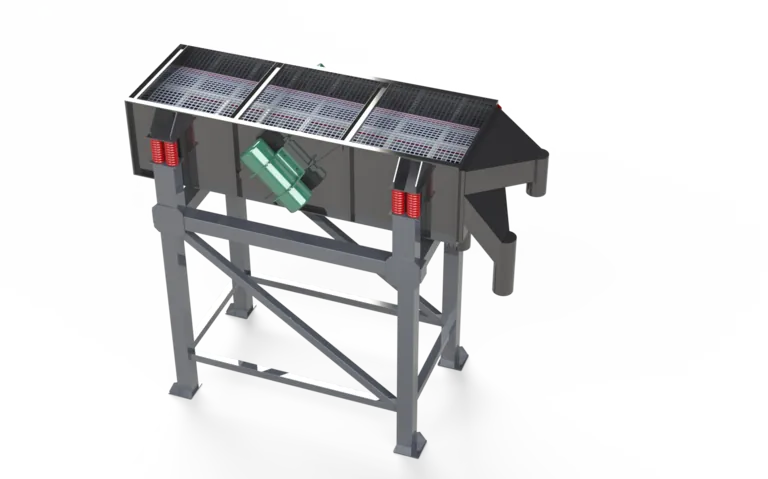
An investment decision is rarely settled by an equipment list; it is settled by the document that shows why the list looks the way it does. A crushing plant feasibility study makes every assumption visible in one file, from reserve to market and from the flow sheet to the cash forecast. Its value lies not in the single number at the end but in the assumptions written openly enough to be challenged.
Crushing plant feasibility study: a pre-feasibility study is not the same document
When the two stages are confused, an investor mistakes a rough early study for a final decision paper. The established distinction in industrial and mining projects is this: the pre-feasibility stage decides whether the project deserves further work, while the feasibility stage decides whether to invest. The precision expected of the cost estimate differs accordingly.
| Heading | Pre-feasibility | Feasibility |
|---|---|---|
| Purpose | Is the project potentially viable | Confirm technical and economic viability |
| Estimate accuracy | About ±25-35% | About ±10-15% |
| Design level | Conceptual, preliminary selection | Detailed, finalised |
| Decision taken | Proceed to the full study | Commit the investment |
Section order and the evidence each section demands
A common drafting mistake is to begin with the easiest section. The right order starts with raw material, because if the material is wrong every later section rests on a false floor. The table lists the sections, the evidence that makes each one credible, and who produces it.
| Section | Evidence sought | Who produces it |
|---|---|---|
| Raw material and reserve | Sample analysis, reserve calculation, permit status | Mining engineer, laboratory |
| Market | Regional demand, existing producers, sales split by fraction | Sales side, field survey |
| Site and infrastructure | Power, water, haul access, distance, permitting path | Project team, correspondence with authorities |
| Technical solution | Flow sheet, stage capacities, equipment list | Joint work with the plant builder |
| Organisation | Shift pattern, headcount and skills | Operations management |
| Financial projection | Capital items, operating cost, cash flow | Accountant with the operator |
| Risk | Sensitivity table, scenarios, mitigation list | Investor and project team together |
The raw material and reserve section
This section answers two questions: what the material is, and for how long it lasts. Rock type, abrasiveness and crushability drive equipment selection directly, while moisture and clay content decide whether washing is needed. On the reserve side, the relationship between the annual production target and the deposit life is stated plainly, because the payback horizon of a plant cannot outlive the quarry that feeds it.
Sample analysis belongs in the report with the date, the sampling point and the laboratory named. A study resting on a single sample cannot see variability inside the deposit and produces surprises in the first year.
The market section and the fraction split
In a crushing and screening investment, market analysis is not a total demand forecast; it is the split showing how much of which fraction actually sells. Where ready-mix plants dominate a region, fine and medium fractions carry the demand; where road works dominate, sub-base and base course mixtures come forward. The production recipe is built on that split, otherwise the plant fills its capacity while the unsold pile grows.
Haul distance is market data too. Transport takes a heavy share of the delivered price of aggregate, so the geographic radius of the market must be drawn honestly.
The technical solution section
The technical section is not a catalogue annex but a flow sheet that answers what the market section asked for. Stage capacities are matched to each other, screening area is sized for the target fractions, and the circulating load is counted in. The choice between a stationary and a mobile arrangement is justified here, driven by deposit life, relocation needs and site conditions.
A structured tool such as the product selection wizard narrows the machine set and gives the technical section its starting point; the final list is fixed with the manufacturer, with the material analysis in hand.
The financial projection section
The financial section calculates three measures and states their definitions. Net present value is the difference between the present value of cash inflows and outflows; a positive figure indicates the project creates value above the required rate of return. The internal rate of return is the discount rate at which net present value becomes zero, and it is compared with the investor's hurdle rate. The payback period is the time needed to recover the initial capital, and a shorter period reduces liquidity risk.
The three measures mean something only together. A project with an attractive payback period can still be weak on net present value if the deposit life is short. And unless the report states the discount rate and the capacity utilisation assumption, none of the three numbers can be audited.
The risk and sensitivity section
The risk section shows which assumption has to move before the decision changes. Technically it covers reserve uncertainty and recovery assumptions; commercially, price, exchange rate and cost inflation; on the environmental and permitting side, regulatory compliance and local acceptance. The method is sensitivity analysis: the response of net present value and internal rate of return is tabulated as price or cost moves by a stated percentage.
A study without a sensitivity table is a single-scenario forecast. Capacity utilisation, selling price and energy cost should each be tested separately at minimum. As the size of the commitment grows, so does the number of scenarios worth running, and the cost items behind them are treated separately under investment and cost.
Gaps that leave a study weak
- A raw material section resting on one sample.
- A market section written on total tonnage with no fraction split.
- A flow sheet that ignores the circulating load.
- A cash forecast with no discount rate stated.
- Permitting durations missing from the schedule entirely.
Frequently asked questions
Does the equipment manufacturer write the study?
The technical section is prepared jointly with the manufacturer, but the market, financial and risk sections rest on the investor's own data. A study written entirely by one party is hard to audit.
Can the pre-feasibility stage be skipped?
It can on small additions to an existing operation. Where a new deposit and a new site are involved, the early stage protects the effort that would otherwise be spent on a detailed study of a dead project.
How long does a study stay valid?
There is no fixed period; assumptions are refreshed when inputs such as energy cost, exchange rate and regional demand move. The wider the gap between the report date and the decision date, the more the financial section needs updating.
Definitions of technical terms: Glossary