 EN — English
 TR — Türkçe
 DE — Deutsch
 RU — Русский
 FR — Français
 ES — Español
 AR — العربية
 SR — Српски

Portable Primary Jaw Unit Fed by a Wobbler Pre-Screener
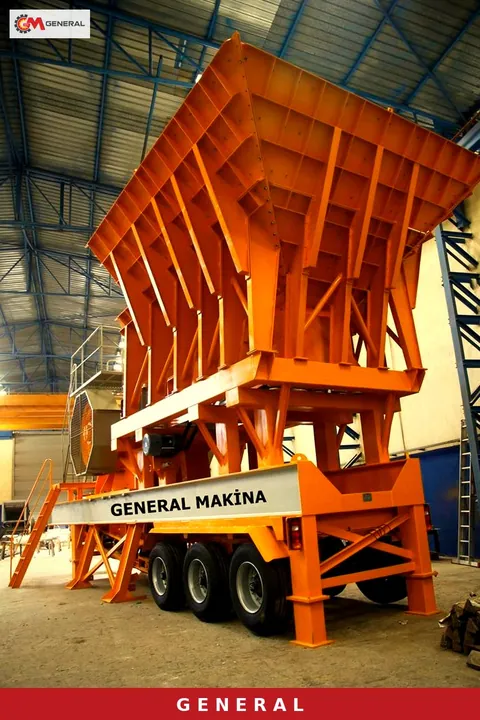
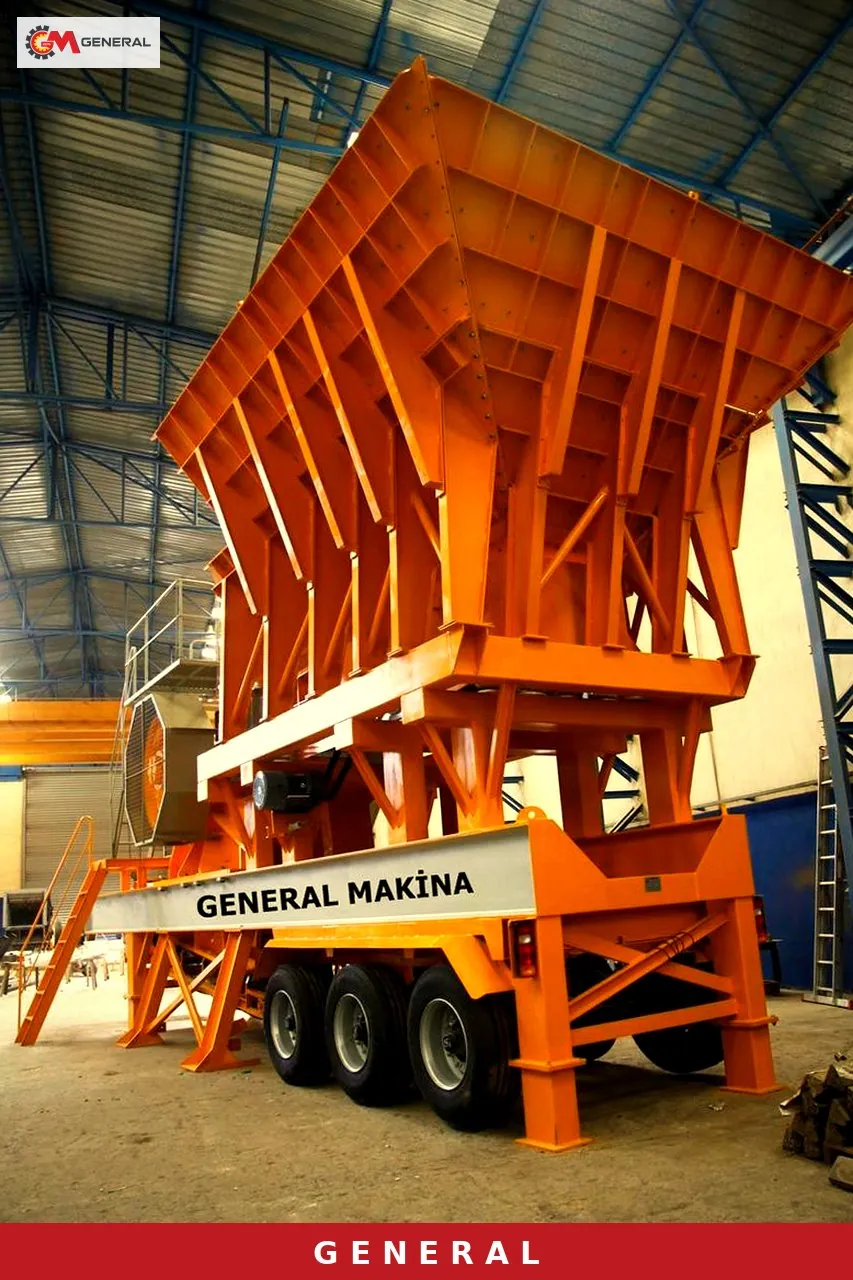
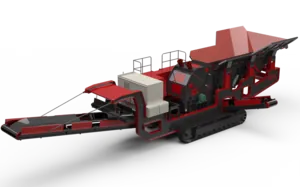
The Mobile Jaw Plant with Wobbler Feeder combines primary crushing and pre-screening on a single chassis as a high-capacity portable unit. It works at 250-450 t/h and is the highest-capacity primary solution in the range. The wobbler feeder gives superior performance in sticky, wet and clayey material.
Working principle and distinguishing feature
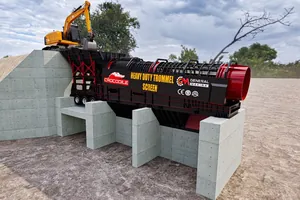
The distinguishing feature is the wobbler (paddle) feeder: as material advances on rotating shafts, stones roll and rub against each other; this tumbling action separates surface dust, clay and fines. The result is cleaner feed to the jaw crusher, so crushing efficiency rises and wear falls. It handles wet/sticky feed without the blinding that a standard grizzly feeder suffers.
Technical specifications
| Parameter | Value |
|---|---|
| Capacity | 250-450 t/h |
| Feeder | Wobbler (paddle), with pre-screening |
| Crusher | Jaw (primary) |
| Chassis | Single chassis, fast setup |
Feed/product table values are confirmed with the order specification; jaw plates are manganese.
Material and application
For sticky, wet, clayey primary feed the wobbler's key advantage stands out; it works where a grizzly feeder blinds. It is used in quarries, mine sites and recycling. As a jaw primary it is also the correct choice for abrasive rock (compression principle). Because the wobbler pre-separates clay, the jaw plates see cleaner feed, so plate life extends and cost per tonne falls.
Machines to complete the plant
For full gradation see Mobile Crushing Plants, for the component see the Wobbler Feeder, for the screen-less variant the Mobile Primary Jaw Crusher, and if washing is needed the Mobile Washing-Screening Plants. Request a quote.
Frequently Asked Questions
What does the wobbler feeder do?
It separates dust and clay in wet/clayey material and feeds without blinding.
What is the capacity?
250-450 t/h; the highest-capacity primary solution in the range.
Why does wear fall?
Cleaner material enters the jaw, so plate life extends.
Where is it used?
In clayey quarries, mine sites and recycling.
How does it differ from a grizzly feeder?
It does not blind on sticky/wet material and avoids clogging.
Wear and spare parts: Spare & Wear Parts
Definitions of technical terms: Glossary
Video
Gallery

Similar Machines
Related Searches
Production capacity may vary depending on the type and hardness of the material, feed size, target product size and operating conditions.
Request a Quote for This Product
Fill in the form and press the button; your request reaches us directly on WhatsApp together with the product details.
ISO 9001:2015 · CE · EAC · Since 1976
What information do we need for a quotation?
- Type and hardness of the material (limestone, basalt, granite, river gravel, etc.)
- Maximum feed size (mm)
- Required product sizes / fractions (e.g. 0-5, 5-12, 12-19 mm)
- Target capacity (t/h) and daily operating hours
- Whether grid electricity is available on site
- Installation country and city